What I did:
Editing a quest
In this mission, the player is tasked with testing a “Random Encounter Machine” which is meant to spawn enemies but broke down. After investigating, the device starts working and wolves are spawned across the map for the player to encounter. However, our team wanted to see what it would look like if upon the machine being fixed, if the wolves spawned one after another rather than all at once.
When the machine was fixed, a data layer would be activated which contained all of the wolves and some additional unrelated props. I started by moving the wolves out of this data layer and instead placing each one into its own dedicated data layer to be activated one at a time.
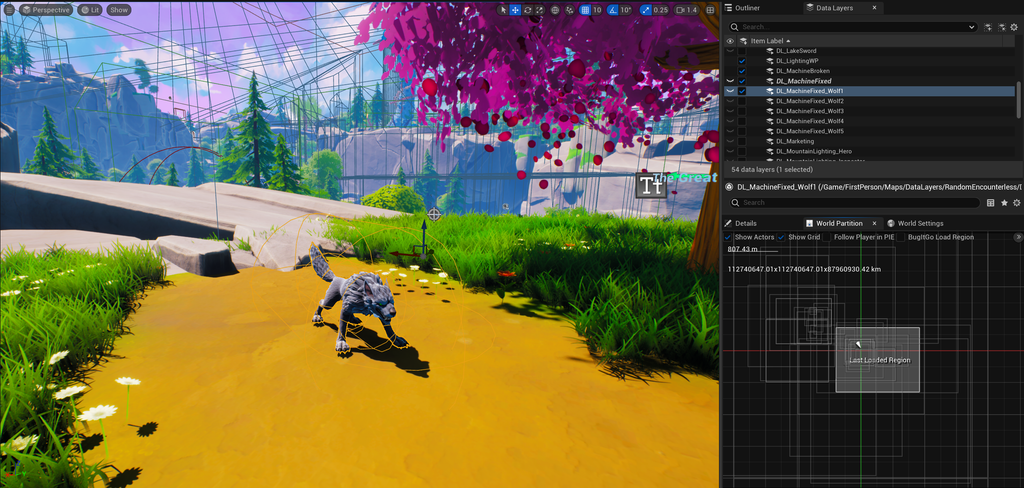
Spawning
Next was the deceivingly simple part, spawning them one after another. Our team is using Narrative Tools’ plug-in for dialogue and NPCs, and while they have a decent amount of documentation, we still had to experiment frequently for specific results. By referencing blueprints that the team had already made, I learned how to create and reference variables that are accessible to the plug-in’s narrative components.
I then created a new event that would check for the amount of wolves that have been slain before adding the appropriate data layer (wolf) to the level.
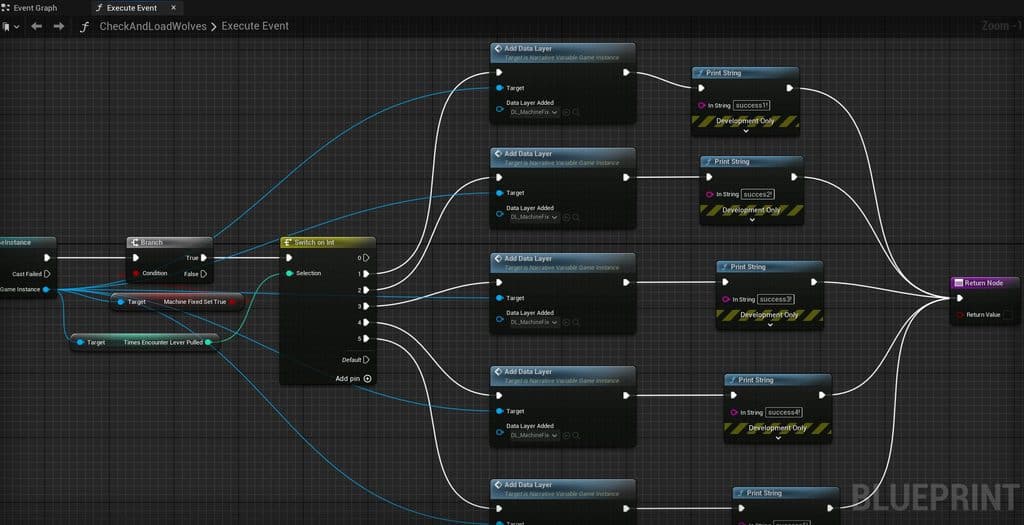
Execution
I then dove into the narrative code and set the events to trigger appropriately while fighting each wolf.
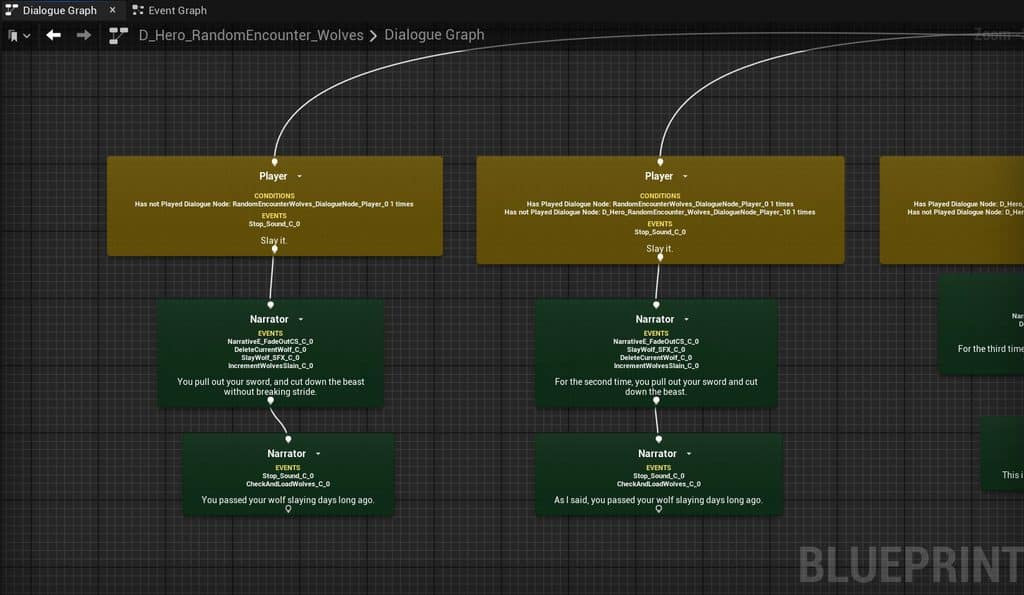
While I planned on additional optimization such as possibly combining the events I created into one blueprint, the team decided to alter the wolf encounters. While my work no longer fit into the game’s vision, I learned a lot about how data layers work along with different ways to reference variables and events across blueprints.
Environmental Storytelling
Along with implementing narrative features technically, I’ve also contributed with communicating story ideas through the placement of props. To be as efficient as possible, I exclusively use props that already exist in the game, and I search for ways to put them into new contexts to contribute to the quest’s environmental storytelling.
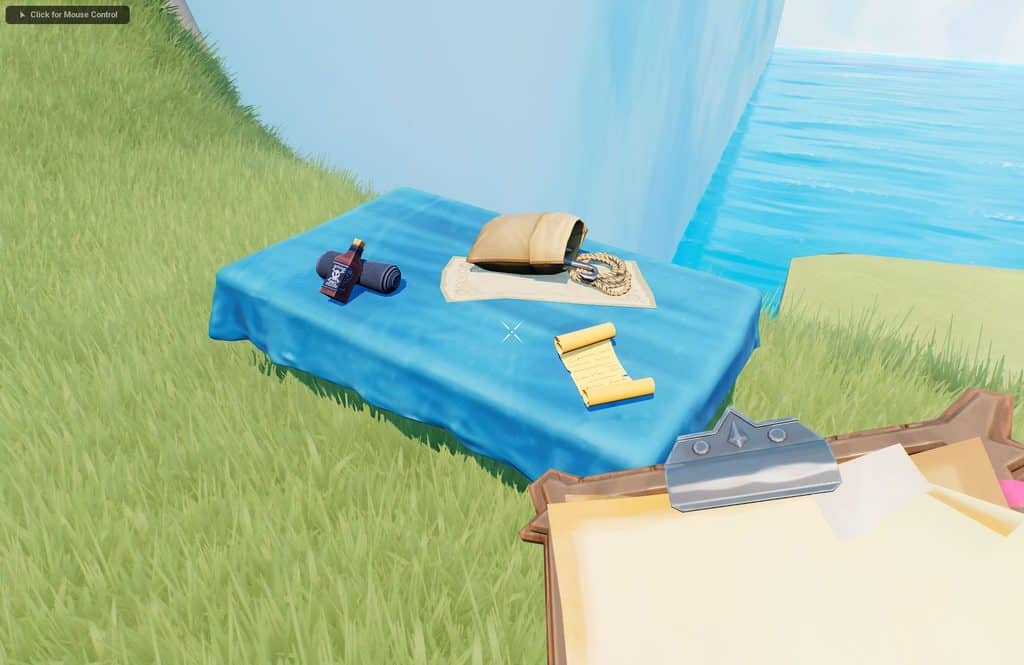
A simple example would be when the can find a note from a daredevil left on a bench. When asked to set dress for this scene, I added some color with a blue tarp before placing several props to characterize the unseen daredevil. Since the table is near a cliff, I thought it was appropriate to have a grappling hook which I assembled using props for an empty money pouch (increased scale), a rope, and a lantern hook. On the side of the table I also put a bottle of booze propped up by a sleeping bag to imply that this daredevil may not be responsible and that could be part of the reason they haven’t returned for their belongings.
In addition, I also assisted with importing levels as level instances into a data layer so we could use world partition to selectively load and unload them without having to leave the larger level.